Understanding Vehicle Underside Corrosion — and How to Spot It
The underside of a vehicle faces some of the harshest conditions on the road. Winter salt, moisture and trapped debris can trigger corrosion quickly—beginning as light surface rust and, if ignored, progressing to serious structural damage.
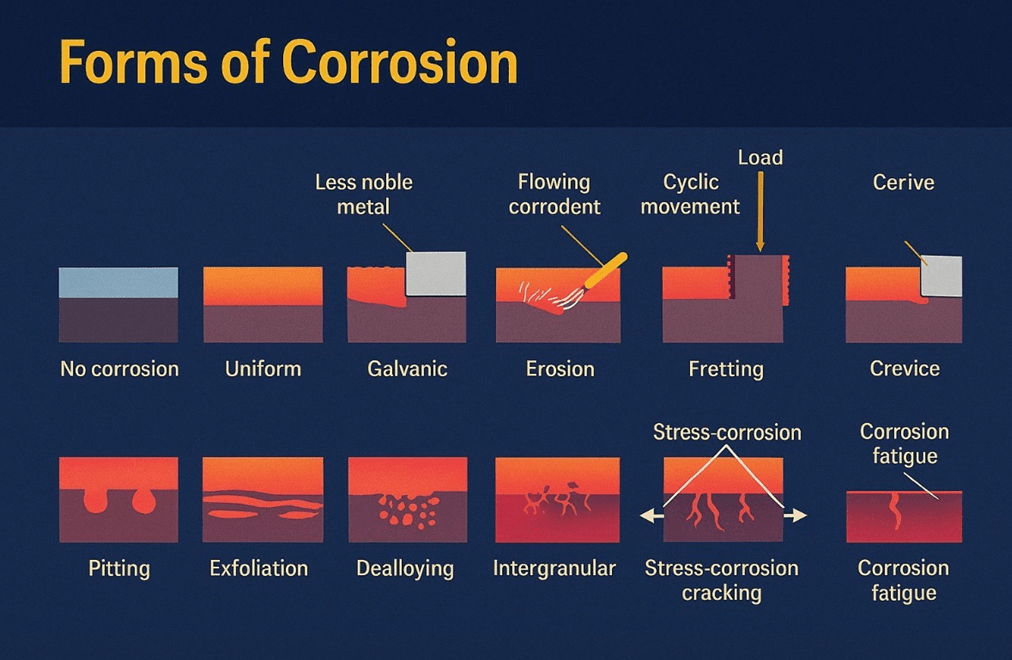
Here’s a guide to the most common types of corrosion found underneath vehicles, what causes them, and why they matter.
-
Surface rust
Appearance: Light reddish-brown discolouration on exposed metal.
Cause: Chips, scratches or stone strikes expose bare steel to oxygen and moisture.
Risk: Low if treated promptly; neglected areas can progress quickly. -
Scale rust
Appearance: Flaking, bubbling or rough patches where rust has bitten into the metal.
Cause: Untreated surface rust advancing into deeper layers.
Risk: Moderate; structural strength begins to diminish. -
Penetrating rust
Appearance: Holes or perforations, often surrounded by scaled areas.
Cause: Advanced corrosion that has eaten right through the metal.
Risk: High; can cause an immediate MOT failure if present on structural parts such as chassis rails or suspension mounts. -
Crevice corrosion
Appearance: Hidden rust in seams, joints and gaps where salt and moisture collect.
Cause: Trapped, stagnant moisture promotes localised attack.
Risk: High; hard to spot and can become serious before it’s visible. -
Galvanic corrosion
Appearance: Accelerated attack where dissimilar metals meet, especially around fixings.
Cause: The “battery effect” between different metals in the presence of an electrolyte (e.g. salty water).
Risk: Moderate to high; common where steel fasteners meet aluminium components—seen more on modern and EV platforms. -
Corrosion-fatigue
Appearance: Cracks or deterioration in parts subject to repeated flexing or stress.
Cause: Cyclic loading weakens metal and increases susceptibility to corrosion.
Risk: High; on springs, arms and other stressed parts it can lead to dangerous failures.
Most vulnerable areas underneath a vehicle
-
Chassis and frame rails: The vehicle’s backbone—penetrating rust here compromises overall integrity.
-
Suspension components: Springs, arms and subframes; corrosion affects safety and handling.
-
Brake and fuel lines: Rust can cause leaks or bursts, risking brake failure or fuel hazards.
-
Exhaust system: Heat cycles, moisture and salt make it highly susceptible.
-
Floor pans: Can rust from below or from inside if moisture is trapped under carpets.
Protecting your vehicle’s underside
Early prevention is best. Schedule regular inspections, wash thoroughly after winter driving, and apply high-quality rustproofing products such as Rustbuster Armaguard Epoxy Mastic or Rustbuster Custom Epoxy to halt corrosion and protect for the long term.
Visit the Rustbuster Ltd website for more information on Understanding Vehicle Underside Corrosion — and How to Spot It
ENQUIRY FORM